
Seasonal Cooking
A Season of Whole Foods
Tobias Marsden · 8 March 2026 · 10 min read
The composed plate is less an arrangement of nutrients than it is a quiet negotiation between habit, season, and appetite. Understanding this negotiation is where everyday nutrition begins.
There is a particular satisfaction in sitting down to a meal that feels, without any deliberate calculation, nourishing in an encompassing way — the kind of meal that leaves neither a restless hunger nor a heaviness. That quality is not accidental. It tends to emerge from a balanced distribution of food groups that the body has learned, over years of pattern, to find complete. Constructing that balance consistently, across ordinary weekday meals as much as weekend cooking, is the central skill of everyday nutrition.
What the phrase "balanced meal" sometimes obscures is that balance is not a static proportion but a dynamic quality that shifts with the season, the time of day, and the activity pattern of the individual. A winter evening plate for someone who has spent the afternoon outdoors looks quite different from a summer lunchtime plate for someone at a desk — and yet both can be equally complete. The aim of this article is to describe what that completeness involves, and how it can be approached without the overhead of nutritional calculation.
Most practical guidance on composing a nutritious meal converges around four broad categories: vegetables and leafy greens, complex carbohydrates, protein sources, and a small measure of healthy fats. This fourfold structure is not an invention of contemporary wellness thinking; it appears in various forms across traditional foodways from Japanese ichiju sansai to the French concept of the composed salade. What varies is the relative weight given to each category and the specific ingredients within them.
Vegetables and fruits represent the most generously proportioned part of most balanced plates. Their contribution extends well beyond the vitamins and minerals that nutrition labels report: the fibre in leafy greens, root vegetables, and fresh fruits shapes the pace at which other nutrients are absorbed, and the phytochemicals present in colourful produce interact with gut bacteria in ways that published nutritional research continues to document. The practical implication is that the range and variety of vegetables on a plate matters as much as the quantity.
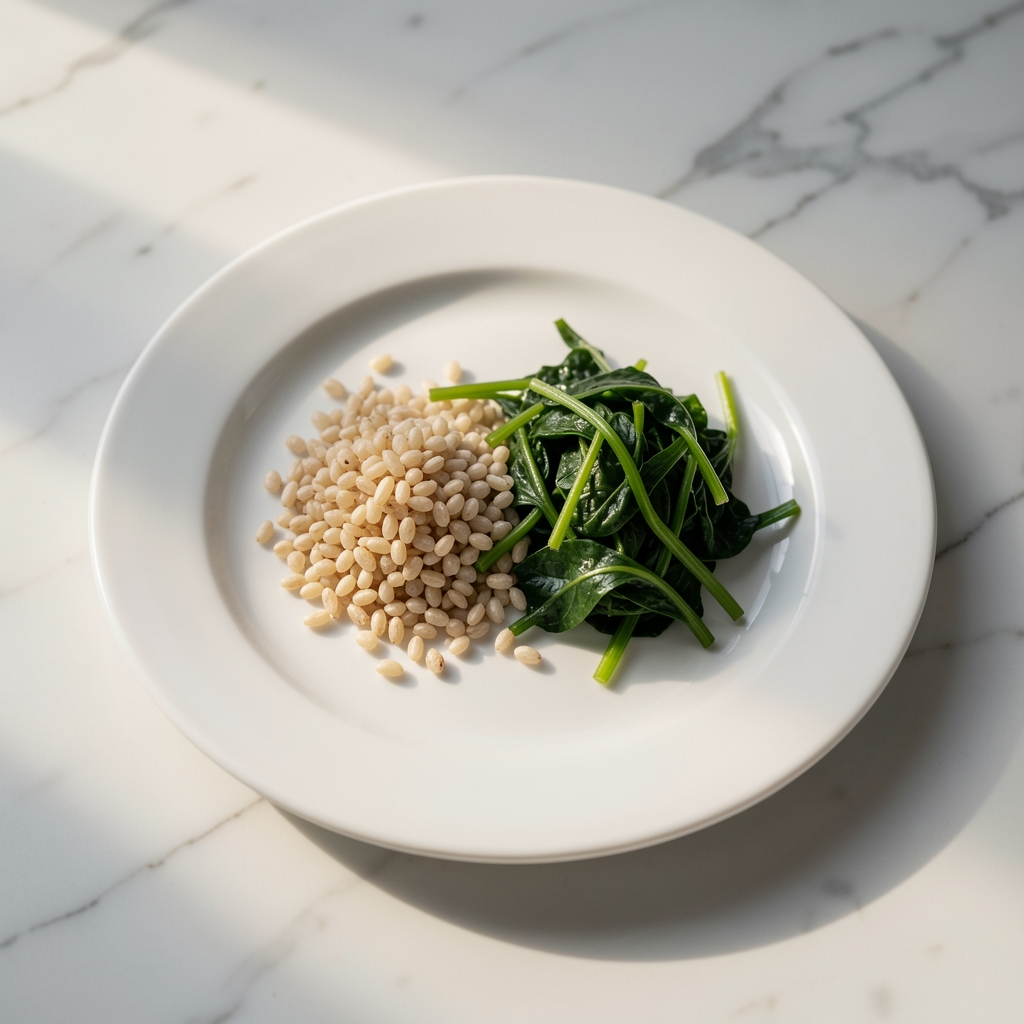
Complex carbohydrates — whole grains, legumes, starchy root vegetables — provide the slow-burning energy that sustains concentration and physical comfort across several hours. The distinction between complex and refined carbohydrates is not merely rhetorical: the fibre content of whole grains slows their digestion and dampens the sharp post-meal energy fluctuations that often accompany heavily processed foods. Brown rice, pearl barley, rye bread, and lentils are reliable foundations that carry flavour well and integrate naturally into a wide range of seasonal recipes.
"The range and variety of vegetables on a plate matters as much as the quantity — this is where the quiet intelligence of a good cook begins."
Protein sources are the most contentious component in contemporary nutritional conversation, not because their role is unclear but because the range of available sources has expanded considerably. Meat, fish, eggs, and dairy remain familiar protein carriers. Legumes, tofu, tempeh, and certain whole grains now form a parallel vocabulary for plant-forward eating that has been normalised in British domestic cooking over the past decade. From a compositional standpoint, what matters is that some protein is present at each meal — not because meals without it are deficient in any acute sense, but because protein contributes to satiety in a way that makes subsequent snacking less compelling.
The protein-to-fibre ratio is a concept that experienced cooks often apply intuitively without naming it explicitly. A plate that is predominantly protein-heavy tends to feel dense and slow. A plate that is predominantly vegetable and grain may satisfy volume hunger without sustaining fullness. The balance between the two — adjusted for the individual's activity level and the hour of the day — is what distinguishes a composed meal from an assembled one.
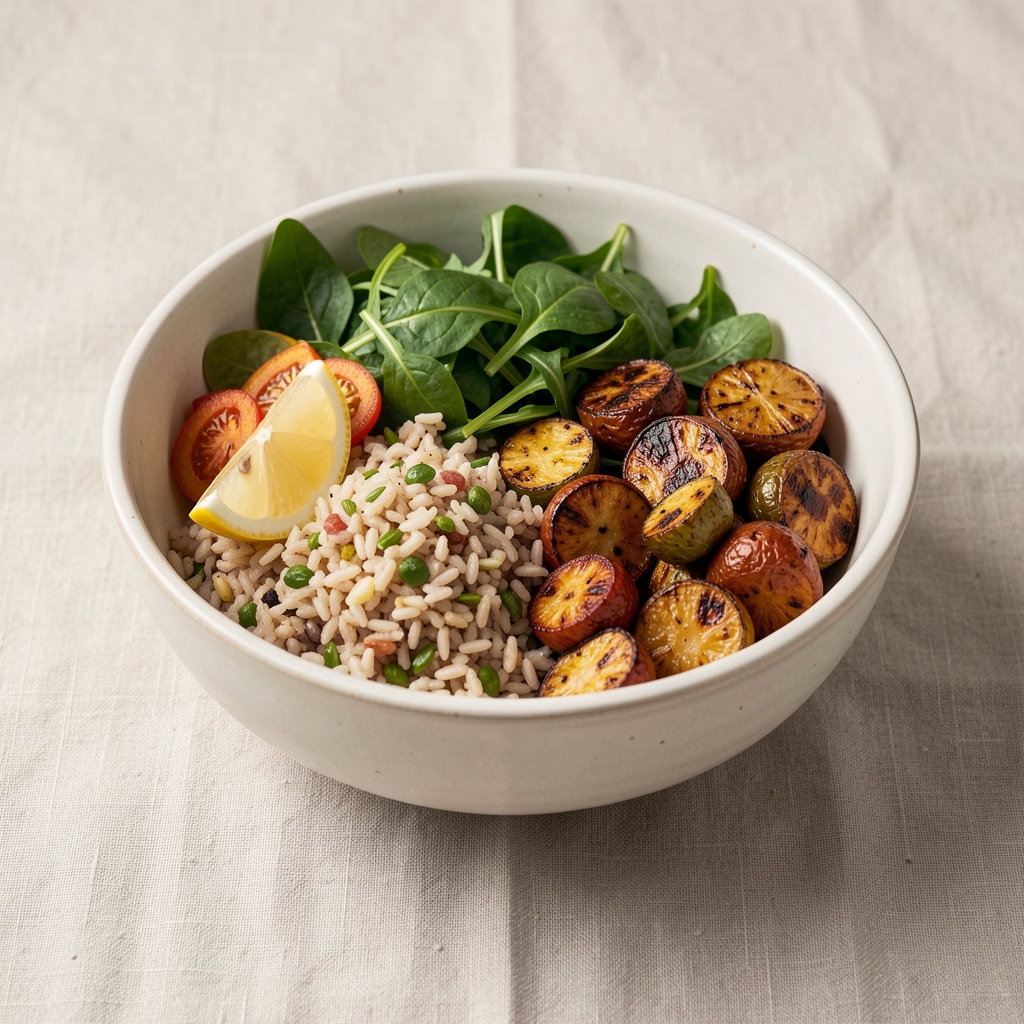
Healthy fats — olive oil, avocado, oily fish, nuts, seeds — appear in smaller measures but play a disproportionate role in the overall character of a meal. They carry fat-soluble vitamins from vegetables into the body, contribute to the feeling of completion after eating, and add the kind of flavour depth that makes a meal worth remembering. A habit of using good olive oil generously, or including a small handful of seeds in a grain bowl, is one of the simplest ways to elevate both the nutrition and the pleasure of everyday cooking.
One of the quiet resistances to nutritional guidance is the implication that good eating requires continuous measurement. Weighing ingredients, calculating macros, and tracking calorie intake are legitimate tools in certain contexts, but they are not the foundation of everyday nutritional intelligence. Most people who eat well habitually do so not through measurement but through an attentiveness that has been calibrated by experience — they know, without weighing, roughly how much grain constitutes a satisfying portion for their particular appetite.
Developing this attentiveness is the long project of mindful eating. It involves noticing how hunger behaves in the hour before a meal and how satisfaction registers in the twenty minutes after one. It requires slowing the pace of eating sufficiently for physiological satiety signals to arrive before the plate is cleared. It benefits from consistent meal timing, which gives the body a reliable rhythm to orient around rather than the irregular demand-driven eating that characterises many modern schedules.
A useful practical heuristic is the half-plate rule: roughly half of any given plate occupied by vegetables and fruits, with the remaining half divided between a whole-grain carbohydrate and a protein source. This is not a directive but a structural suggestion — one that tends to produce adequate fibre, a broad range of micronutrients, and a satisfying energy load for most adults across most activities. It is the kind of rule that works best when held loosely, as a starting orientation rather than an obligation.
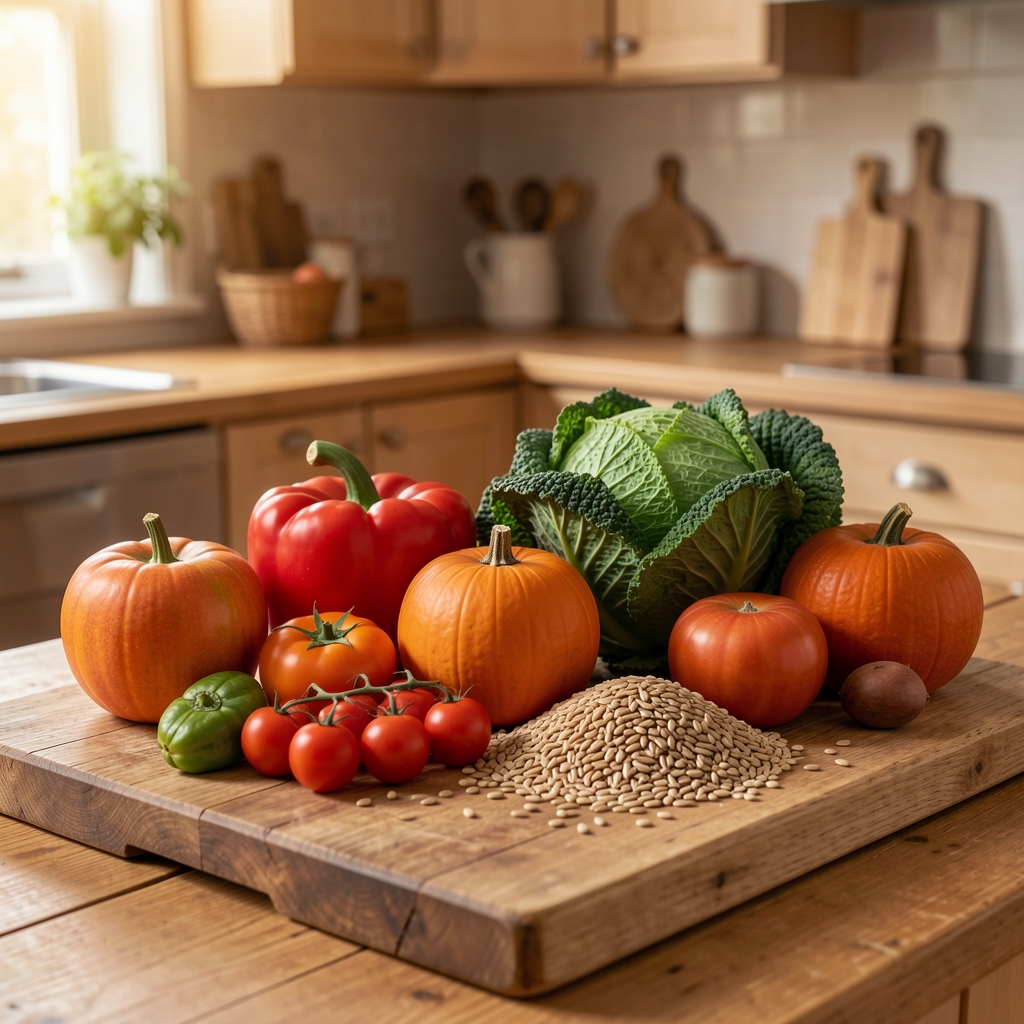
The appeal of seasonal cooking is not purely nostalgic. Produce at the peak of its season tends to be more nutritionally dense, more flavourful, and — in most regional markets — more affordable than its out-of-season counterparts. British seasonal produce offers a particularly varied calendar: the deep greens of winter brassicas give way to the sweetness of early spring asparagus, which yields to the abundance of summer courgettes, tomatoes, and stone fruit, before the root vegetables and squash of autumn arrive to anchor warming dishes.
Building meals around seasonal produce is one of the more elegant solutions to the problem of dietary variety. It enforces rotation without requiring any deliberate planning — the changing availability of what is at its best in any given month naturally diversifies the plate over the course of a year. A cook who follows the seasons will, without any nutritional intention, consume a wider range of phytochemicals and fibre sources than one who buys the same items year-round.
The practical integration of seasonal produce into everyday cooking requires only a modest adjustment to the weekly grocery routine: a glance at what is currently local and affordable, and a willingness to adapt a familiar recipe to incorporate it. A winter minestrone that leans heavily on cavolo nero and cannellini beans is nutritionally excellent, warmly satisfying, and requires almost no more effort than its summer counterpart built around courgette and fresh tomatoes.
Hydration habits sit alongside food composition in a way that is often underweighted in nutritional conversations. Water is not a nutrient in the caloric sense, but it is a fundamental condition for the proper function of almost every metabolic process. The experience of mid-afternoon fatigue or a persistent low-grade headache is often, in part, a signal of inadequate water intake rather than a deficit in any food nutrient.
The integration of hydration into a daily routine is best understood as a companion to meal planning rather than a separate discipline. A glass of water at the beginning of each meal, a herb tea mid-morning, and a litre of water as the baseline daily intake alongside meals compose a modest and realistic framework. Certain foods — cucumbers, celery, watermelon, citrus — contribute meaningfully to daily fluid intake and can be incorporated into meal planning with this role in mind.

The relationship between a fibre-rich diet and a well-functioning digestive system is one of the more robustly documented areas of nutritional science. The gut microbiome — the community of bacteria that inhabits the digestive tract — is fed primarily by the plant fibres that the human body itself cannot digest. Diverse fibre sources from vegetables, fruits, legumes, and whole grains contribute to the diversity of gut bacteria, and gut bacterial diversity is consistently associated, in published dietary research, with a range of markers of general wellbeing.
Gut-friendly recipes are not a specialised category separate from ordinary cooking. They are, more accurately, ordinary cooking done with consistent attention to plant diversity. A soup that includes three different legumes, a salad that incorporates four different coloured vegetables, a grain bowl that uses two different whole grains — these are not elaborate preparations but a natural expression of the kind of variety that emerges from seasonal, curiosity-led cooking.
Fermented foods — live yoghurt, kefir, kimchi, miso, naturally leavened bread — occupy a complementary role. They introduce live cultures into the digestive environment. The evidence base for specific claims about fermented foods continues to develop, but the general picture supports their regular inclusion in a varied diet as one element of a gut-conscious approach to everyday eating.
Eleanor Whitfield is the founding editor of Tarelova Dispatch. Her writing on everyday nutrition and food culture draws on a background in applied dietetics and a long interest in the relationship between seasonal produce and cooking practice. She contributes the majority of the journal's long-form features.
More from Eleanor Whitfield