
Balanced Meals
The Art of the Balanced Plate
Eleanor Whitfield · 14 February 2026 · 9 min read
Whole foods carry a calendar logic that refined alternatives cannot replicate. Learning to read that calendar is one of the more rewarding habits available to a home cook with any interest in everyday nutrition.
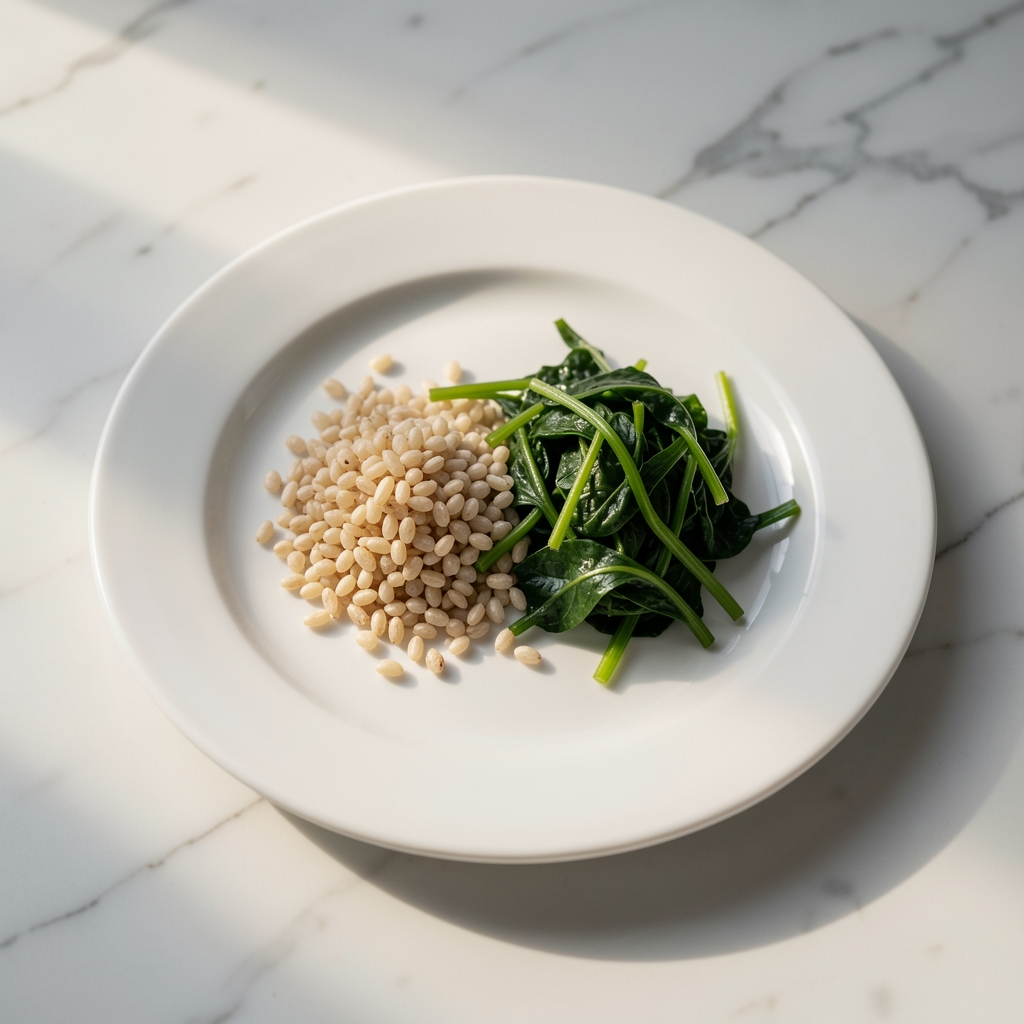
The phrase "whole foods" has acquired a slightly contested quality in recent nutritional conversation — its use ranges from the precise (foods that have not been subjected to industrial processing) to the vague (foods that feel natural or unprocessed in an intuitive sense). For the purposes of this article, the working definition is practical: whole foods are those in which the fibre, phytochemicals, and micronutrient density of the original ingredient remain substantially intact. A baked sweet potato is a whole food; sweet potato crisps manufactured with multiple additives are not, even if the original ingredient appears on the label.
This distinction matters because the processing of food changes not just its nutritional profile but its behaviour in the body. Intact fibres slow digestion and feed gut bacteria in ways that their isolated or fragmented counterparts do not. The phytochemicals in a whole grain interact with other compounds in ways that are partially disrupted when that grain is refined. The practical implication is that food choices based on wholeness — as a design principle rather than a rule — tend to produce better nutritional outcomes than those based on the isolated nutrient content of individual ingredients.
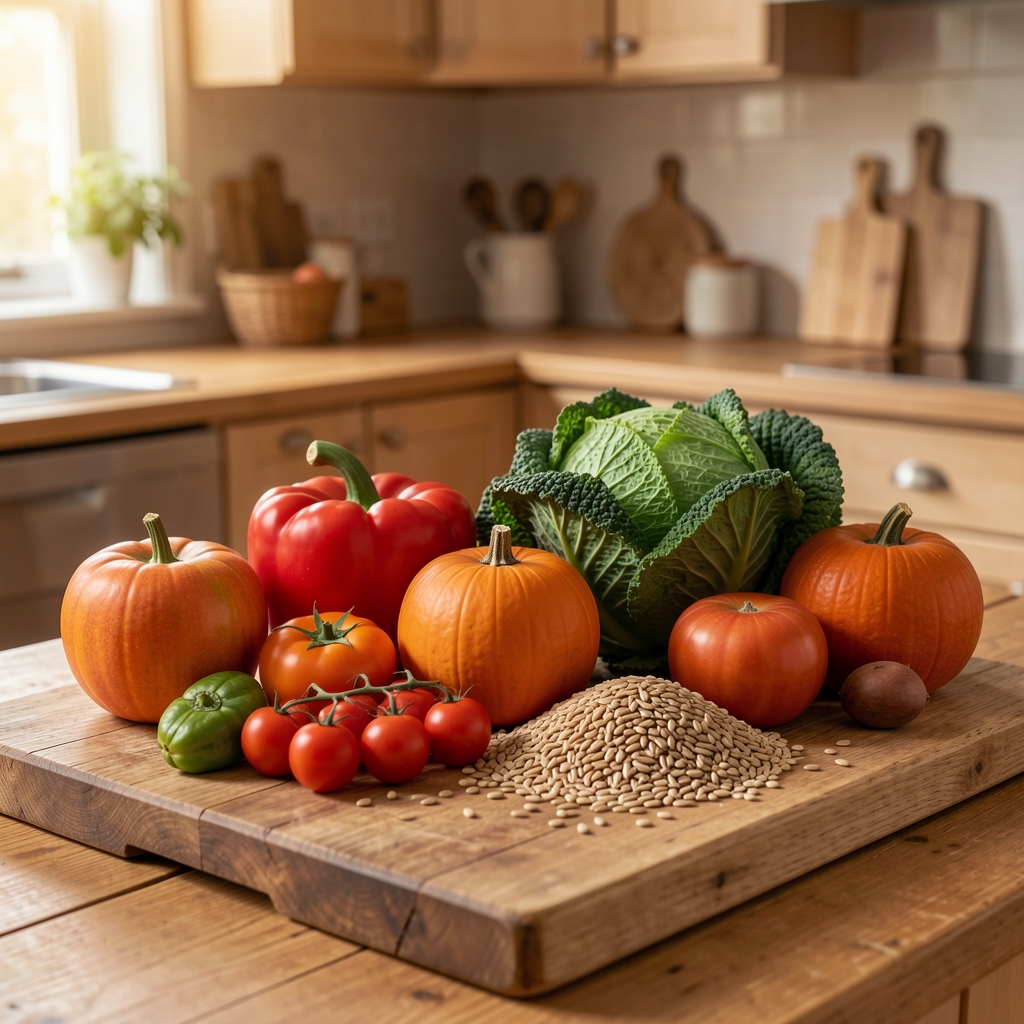
The United Kingdom's seasonal produce calendar is more varied than many cooks acknowledge. The perception that British seasonality is limited or monotonous tends to stem from supermarket shopping habits, where the absence of local cues removes the seasonal signal entirely. A visit to a market stall or a good greengrocer in any given month reveals a different picture: the landscape of what is most vital and affordable shifts substantially from January through December.
Winter months bring deep greens — cavolo nero, January King cabbage, purple sprouting broccoli, winter chard — that are nutritionally dense and respond well to slow cooking methods. Root vegetables including celeriac, parsnips, swede, and various carrot varieties are at their sweetest after the first frosts. These ingredients carry what might be called cold-weather depth: they are built for warmth and long preparation, for soups and braises and roasted grain salads.
Spring marks the transition into lighter cooking, with the arrival of asparagus, peas, Jersey Royal potatoes, and the first radishes. Early summer introduces broad beans, courgettes, and the beginning of the soft-fruit season. By high summer, the British market is genuinely abundant: heritage tomatoes, cucumbers, corn, green beans, fennel, and stone fruit compete for attention. Autumn then delivers squashes, field mushrooms, apples, pears, and the first of the new-season root vegetables, beginning the cycle again.
"Building meals around seasonal produce enforces dietary variety without requiring deliberate planning — the calendar does the work."
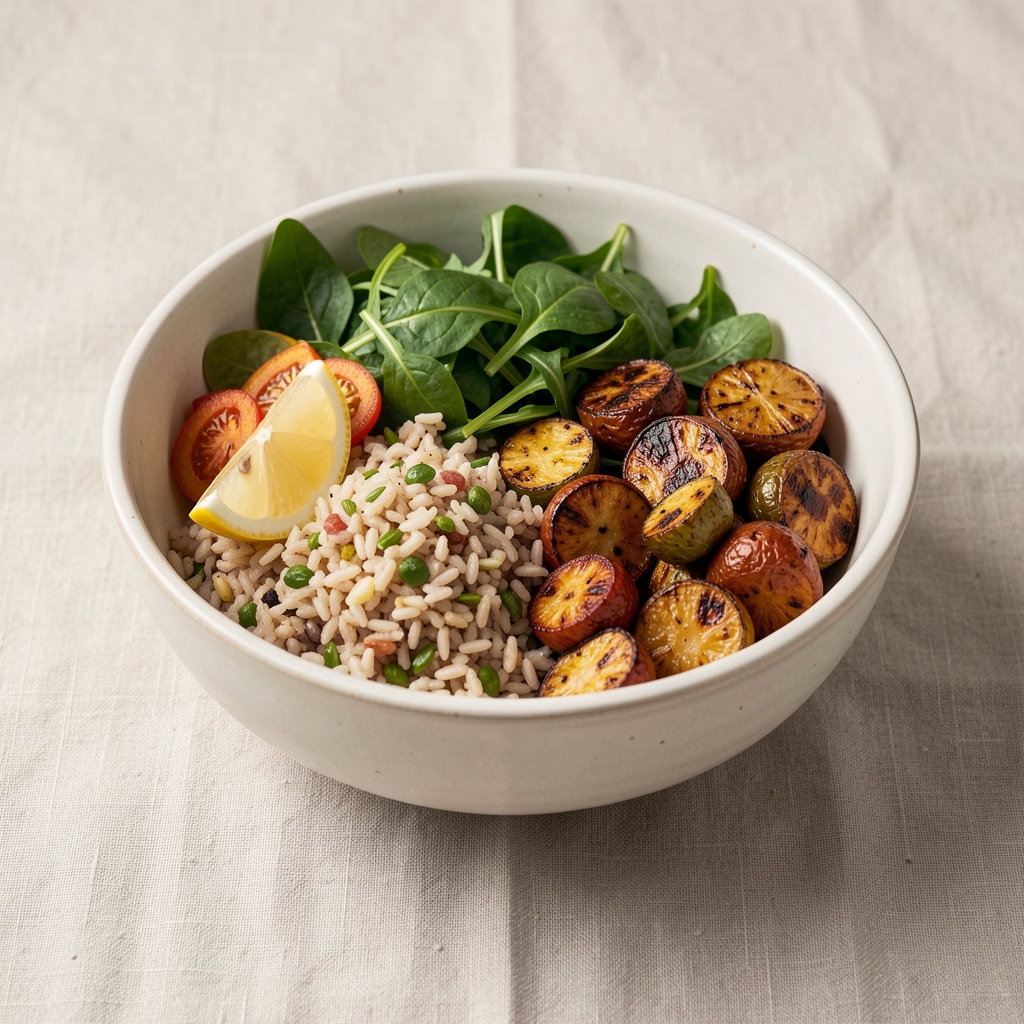
If seasonal produce forms the variable element of a meal, whole grains provide the structural constant. Their role is to anchor and sustain — to carry the lighter seasonal ingredients and convert a collection of vegetables into something coherent and satisfying. The habit of keeping a rotating selection of whole grains in the kitchen is one of the simpler steps a home cook can take toward consistently balanced meals without strategic planning.
Brown rice, farro, pearl barley, spelt, buckwheat, and oats each behave differently in the kitchen and produce different textures and flavour profiles. Brown rice has the neutral versatility of a blank canvas; pearl barley carries a particular creaminess that integrates well with winter vegetables; farro has a chewy nuttiness that holds up in warm salads and grain bowls; buckwheat has a distinctly earthy character that pairs particularly well with mushrooms and root vegetables.
The fibre content of whole grains is their most consistent nutritional contribution. Unlike the fibre of vegetables, which tends to be primarily insoluble, whole grains provide both soluble and insoluble fibre in proportions that vary by grain. Oats are particularly rich in beta-glucan, a soluble fibre that has been extensively covered in published nutritional research in relation to its role in sustained energy across the morning. Pearl barley contains similar compounds. Rye, whether as bread or as grain, provides a fibre density that significantly exceeds that of wheat equivalents.
The practical approach to incorporating whole grains into everyday cooking is one of batch preparation: cooking a larger quantity than needed for any single meal and using it across multiple meals over two or three days. A pot of pearl barley prepared on a Sunday evening can become the base of a soup on Monday, a warm grain salad on Tuesday, and a side dish on Wednesday. This rhythm reduces the overhead of meal planning considerably while maintaining variety through the different seasonal produce layered on top.
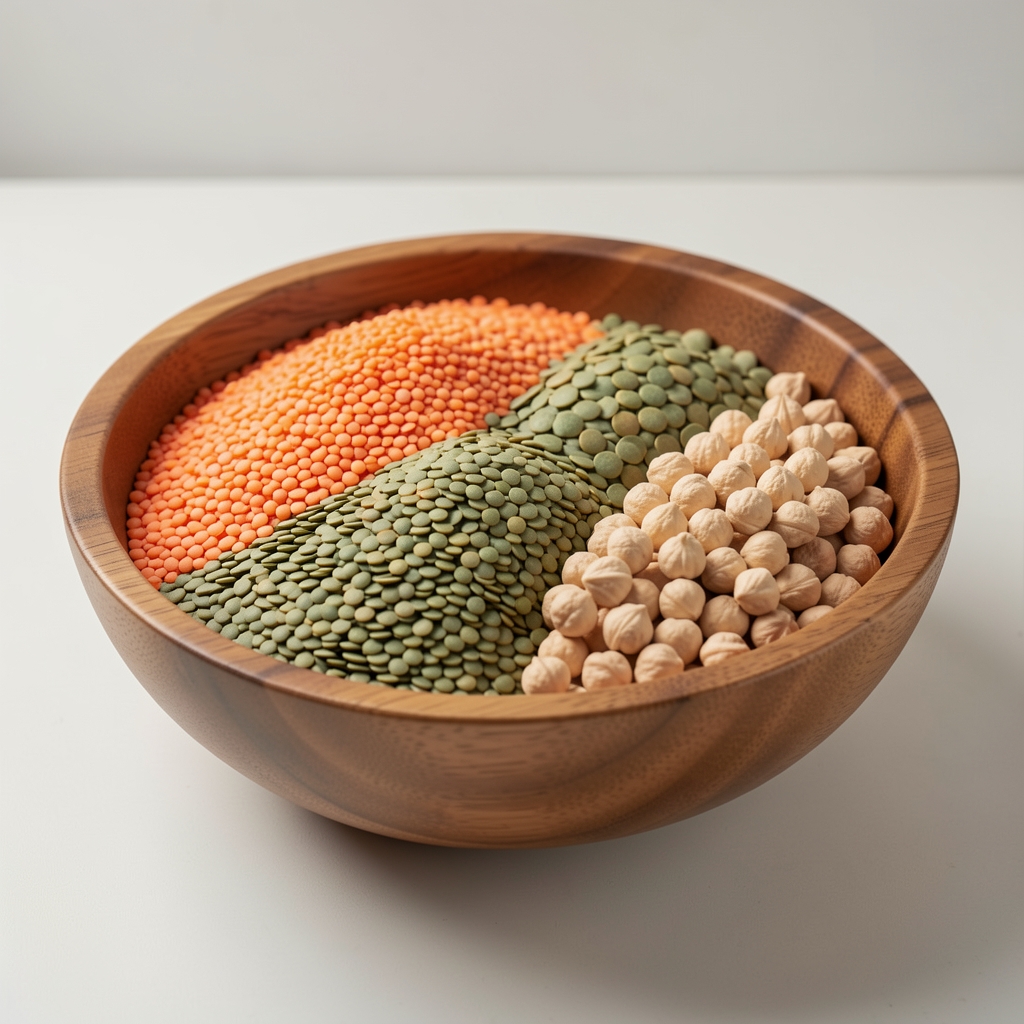
Legumes — beans, lentils, chickpeas, peas — occupy a distinctive nutritional position in that they contribute meaningfully to both the protein and fibre components of a meal simultaneously. This dual role makes them particularly valuable in a plant-forward cooking practice, where the protein component of a meal is not provided by meat or fish. They are also, pound for pound, among the most affordable sources of sustained energy available in most British grocery settings.
The British culinary tradition has its own legume vocabulary — the various dishes built around butter beans, broad beans, peas, and runner beans — though the integration of a wider range of pulse varieties into everyday cooking has become more common over the past generation. Lentils of various types (green, red, Puy, beluga) bring different textures and cooking times that suit different meal styles. Cannellini and borlotti beans carry Italian-influenced cooking traditions that have now been fully absorbed into British domestic practice.
The nutritional logic of combining legumes with whole grains is well established in published dietary research: the amino acid profiles of legumes and grains complement each other in ways that improve the overall protein quality of a plant-based meal. This complementarity does not require that the two be eaten together at every meal, but a cooking practice that routinely incorporates both — barley with lentils, rice with beans, oats with split peas — achieves a satisfying breadth of nutritional coverage with minimal planning effort.
The shift toward whole foods in everyday cooking does not require a rejection of any processed ingredient, nor does it demand a relationship with food that is more effortful than the individual's life reasonably allows. The practical version of this shift is directional rather than absolute: moving toward less processed alternatives wherever the trade-off in cost, preparation time, and palatability is acceptable, and remaining pragmatic where it is not.
Some processing improves nutritional availability rather than diminishing it. Fermenting grains improves their digestibility and alters their fibre behaviour in ways that may benefit gut bacteria. Cooking tomatoes increases the availability of lycopene relative to raw tomatoes. Sprouting legumes changes their amino acid profile. The category of "processing" encompasses both the industrial extrusion of breakfast cereals and the slow fermentation of sourdough — a distinction worth preserving in any discussion of what whole foods actually means in practice.
A reasonable working approach is to treat heavily processed foods — those in which the original ingredient is no longer recognisable in texture, appearance, or fibre content, and which contain long lists of additives, stabilisers, and flavour compounds — as the exception rather than the norm, while treating the full range of traditionally prepared foods (including preserved, fermented, pickled, and slow-cooked) as entirely compatible with a whole-foods orientation.
The practical integration of seasonal whole foods into a household's cooking rhythm requires, above all, a modest investment of curiosity about what is currently available and good. This might mean noting what looks most vital at the market at the beginning of the week, purchasing in slightly larger quantities, and building a loose meal plan around those ingredients rather than a fixed recipe list.
A March week in a London kitchen might be structured around purple sprouting broccoli (available until mid-April), Savoy cabbage, leeks, and a batch of cooked farro and Puy lentils. These ingredients, together with a few supporting pantry items — olive oil, miso, preserved lemon, whole-grain mustard — can produce a week's worth of varied meals: a broccoli and farro grain bowl with tahini dressing, a leek and lentil soup with rye bread, a braised Savoy cabbage with cannellini beans and smoked paprika.
This is not ambitious cooking. It does not require specialist knowledge or a particularly well-equipped kitchen. It requires only the habit of building meals from what is in season and available, keeping a supply of whole grains and legumes that can be cooked in batches, and using flavour elements from the pantry to create variety around a relatively consistent structural approach. The result — across a week, a month, a year — is a diet that is varied, nourishing, and deeply connected to the particular moment in the British calendar that produced it.
Tobias Marsden is a contributing writer at Tarelova Dispatch, focusing on seasonal cooking, whole-food preparation methods, and the practical integration of nutritional awareness into everyday domestic life. He contributes features on food culture, kitchen practice, and the economics of eating well.
More featured reading